Dating scam research · 2015 infographic revisited
Dating scammer statistics: what has changed since 2015?
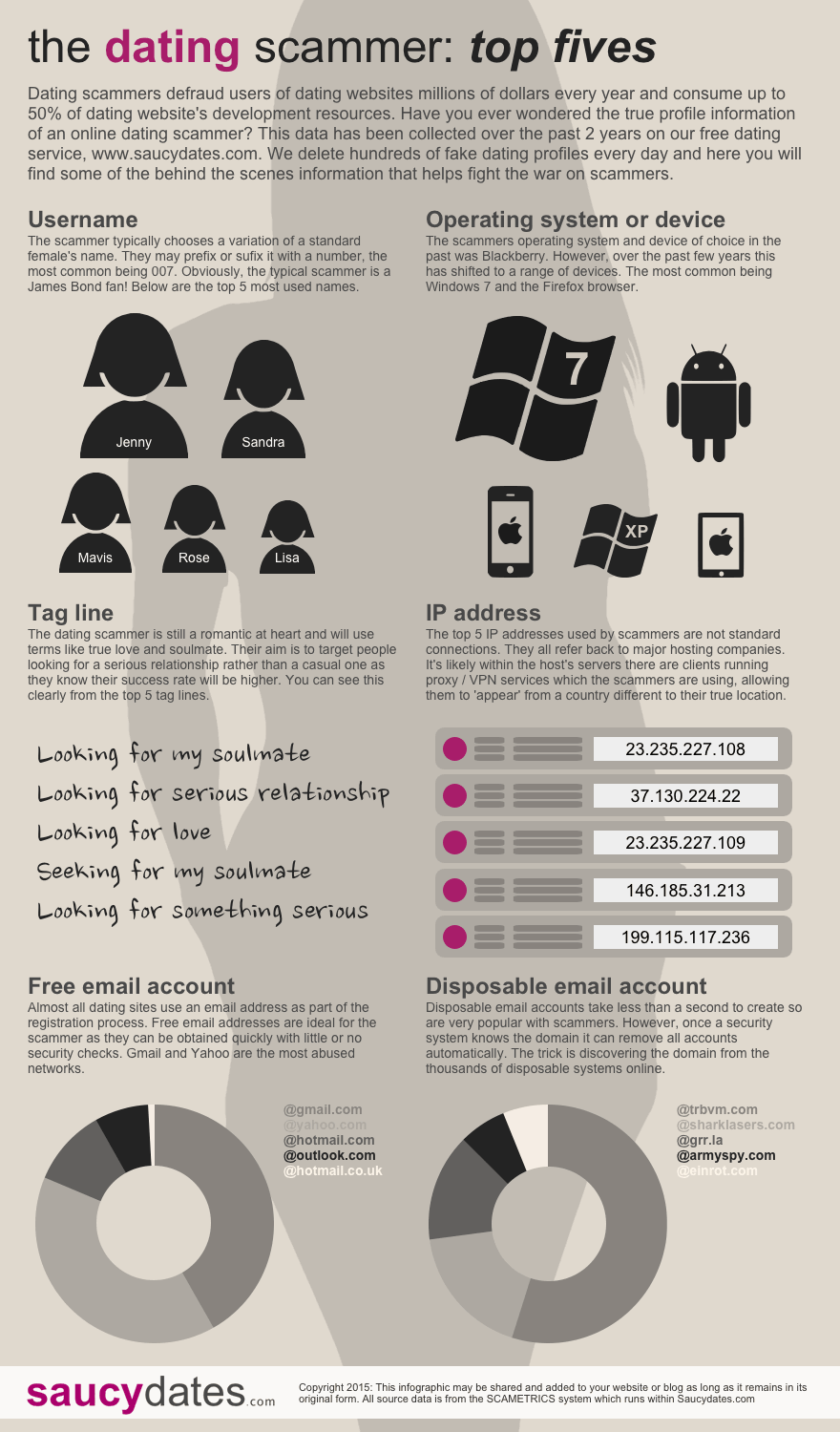
In 2015, Saucy Dates compiled an infographic showing recurring names, profile taglines, email providers and technical details found in scam accounts. More than a decade later, much of the behaviour still looks familiar: convincing identities, promises of romance and accounts designed to be replaced when they are caught.
The original infographic remains below. This update explains which patterns we still encounter, which technical clues have limits, and how to use this research without mistaking an ordinary person for a scammer.
See the 2015 infographic · What still happens · What to look for · Read David Minns’ book
Historical statistics, with an update from our experience
The figures and top five lists in this graphic were compiled in 2015. The graphic describes data collected on Saucy Dates over the preceding two years. It is a historical snapshot of accounts encountered on one service, not a measure of every dating scam worldwide.
The current observations below come from Saucy Dates founder David Minns. They are an operational update, not a new statistical study or a refreshed ranking with published sample sizes. References within the original artwork to software versions and the service describe that earlier period.
The original dating scammer infographic
What has stayed the same in dating scams?
Sandra and Rose still recur
Sandra and Rose appeared in the original top five. David Minns reports that they remain among the names most frequently encountered in scam profiles on the service. Familiar names help a fabricated profile feel ordinary, and successful identities can be reused.
This is a pattern within detected accounts, not a reason to distrust anyone called Sandra or Rose. A name alone tells you nothing reliable about someone’s intentions.
Windows remains familiar
Windows 7 dominated the old graphic. In David’s current observations, Windows remains common among scam accounts, although that does not mean the old version remains dominant. His explanation is its mass market availability: scammers can use the same everyday computers as anyone else.
An operating system is a weak clue on its own. It does not separate a genuine member from a fake account, and the 2015 chart should not be read as current device market data.
The dating scammer taglines have barely changed
According to David’s experience running Saucy Dates, the same broad promises still appear. The original examples were:
- “Looking for my soulmate”
- “Looking for serious relationship”
- “Looking for love”
- “Seeking for my soulmate”
- “Looking for something serious”
These phrases offer an immediate impression of emotional commitment while saying very little about the person. They are easy to reuse across profiles and can appeal to someone hoping for a genuine connection.
However, genuine singles also want love and serious relationships. Neither a familiar phrase nor imperfect grammar proves fraud. The useful question is what follows: a real conversation that respects your boundaries, or a rehearsed story that leads towards money, suspicious links or pressure?
Try Saucy Dates · Adults 18+
Take a more informed approach to dating
Put your awareness of scam warning signs to use while exploring Saucy Dates at your own pace.
Joining, browsing, Hots and flirts are free. Full private messaging requires an upgrade.
Why an IP address cannot reliably identify a dating scammer
The 2015 infographic listed individual IP addresses. Treat those as historical observations, not addresses to track or block today. Addresses can change ownership, be shared by many people or represent a connection service rather than the individual using it.
A scammer can rotate connections or use a VPN or proxy, so the country associated with an IP address does not establish where the person actually lives. Blocking one address does not prevent the same person returning through another connection.
IP information can contribute to a wider assessment, but it is not a dependable identity check on its own. A VPN also has legitimate privacy uses. For members, the person’s behaviour matters far more than trying to trace their connection.
Disposable email addresses are still used, on a much larger scale
Temporary inboxes make it easy to create an account, receive a confirmation message and abandon the address. David reports that disposable email remains a recurring feature of scam registrations. A small static list of providers cannot keep pace with changing domains.
There are now far more than 10,000 disposable email domains in published detection lists. For example, FFraud’s maintained disposable email list reports more than 200,000 domains. Domains are not the same as separate services: one provider can operate many addresses and domain names, and list coverage varies.
The original graphic also named mainstream free email providers. Keep those categories separate. A Gmail, Yahoo or Outlook address is not a disposable account by definition, and using free email is not evidence of a scam. Temporary addresses can also be used for legitimate privacy reasons; they need context rather than an automatic accusation.
Use the patterns to ask better questions
The enduring lesson of these dating scammer statistics is that individual clues are easy to copy or change. Look at the whole interaction, especially what you are being asked to do.
- Notice sudden financial requests. A supposed emergency or travel problem should not become your obligation to pay.
- Be cautious with links. A match directing you to an unfamiliar payment or “verification” page deserves scrutiny.
- Watch for pressure. Requests for secrecy, urgency or intimate material can be more revealing than a profile name.
- Keep your boundaries. You can stop talking, block or report an account without having to investigate the person yourself.
Saucy Dates uses liveness checks during signup to help verify ages and identify fake accounts, alongside member blocking and reporting. No check guarantees someone’s intentions. Our guide to fake dating profiles explains warning signs and next steps, while the dating safety guide covers practical precautions.
Further reading from our founder
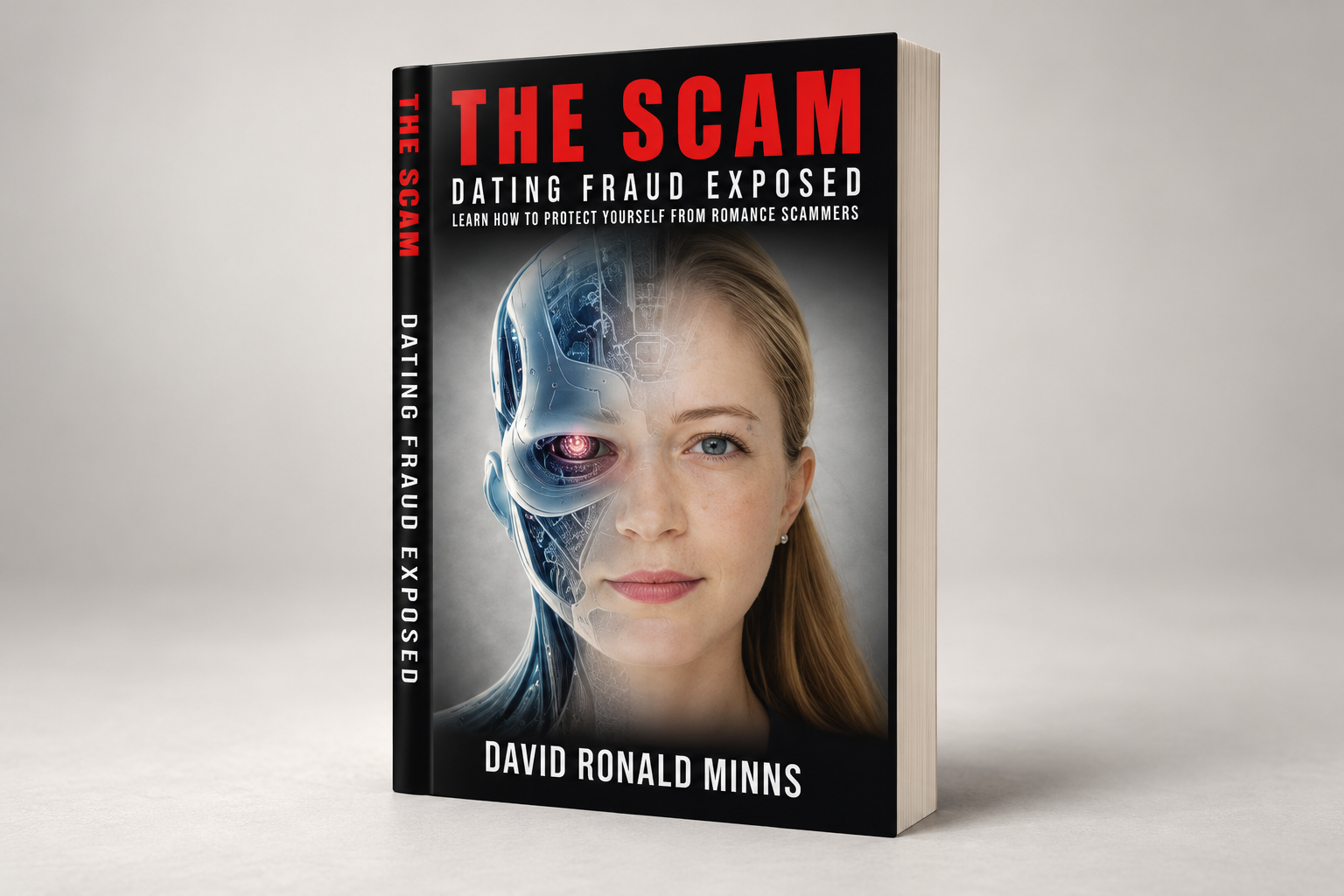
THE SCAM: Dating Fraud Exposed
David Minns, founder of Saucy Dates, wrote THE SCAM: Dating Fraud Exposed under the name David Ronald Minns. For readers who want to explore dating fraud beyond this historical infographic, the book is a place to continue.
Read the description and check available editions on Amazon.
Explore the book on AmazonQuestions about these dating scam statistics
Are these current scammer rankings?
No. The infographic was compiled in 2015 from earlier Saucy Dates data. The accompanying update describes patterns David Minns still observes; it does not present a new measured top five ranking.
Does a name or tagline reveal a scammer?
No. Common names and phrases are used by genuine people too. Consider the wider behaviour, especially deception, pressure and requests for money or sensitive information.
Can I track a scammer using their IP address?
An IP address alone cannot reliably establish a person’s identity or actual location. VPNs, proxies, shared networks and changing connections limit what it can tell you.
Can journalists use the infographic?
Please reference Saucy Dates as the source, link to this article where possible, and state that the infographic was compiled in 2015. Keep current commentary separate from the original findings. For research enquiries or a commissioned survey, get in touch.